Bathrooms have evolved beyond their basic functionality and are now a significant aspect of modern living and home aesthetics. One of the most common dilemmas for homeowners in India, especially while building or renovating bathrooms, is choosing between a Western toilet and an Indian toilet.
Each type has its own advantages, cultural significance, and practical considerations. This guide provides a comprehensive comparison of Western and Indian toilets, covering design, comfort, health implications, cost, and maintenance. By the end, you’ll have a clearer understanding of which option is better suited to your needs.
Understanding a Western Toilet
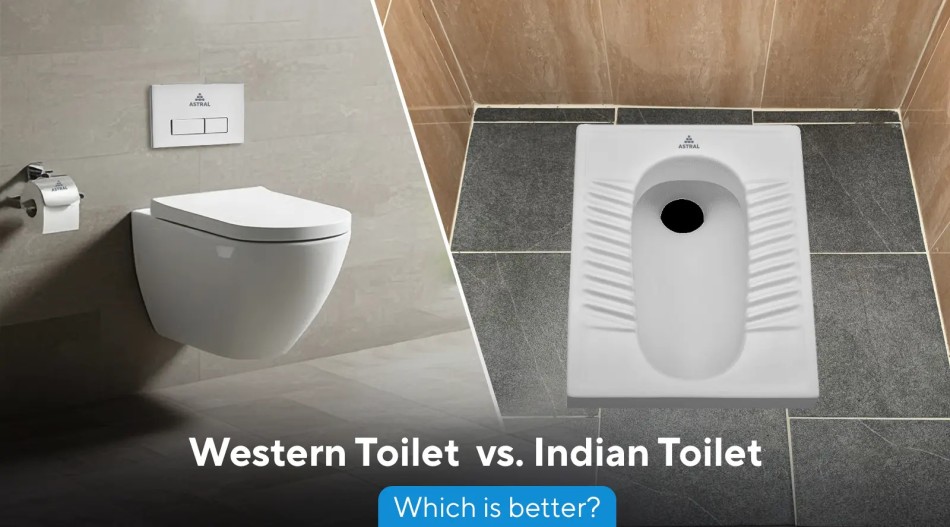
A Western toilet, or commode, is designed for sitting, similar to using a chair. These toilets often include flush tanks and may feature modern additions like soft-close seats, wall-mounted designs, or bidet attachments.
Popular Types of Western Toilets:
– Floor-Mounted Commode: Common in Indian homes and simple to install.
– Wall-Hung Toilet: Offers a modern “floating” look and is easier to clean underneath.
– One-Piece Toilet: A compact and sleek design that enhances bathroom aesthetics.
– Smart Toilet: Equipped with advanced features like sensor-based flushing, heated seats, and bidets.
Understanding an Indian Toilet
An Indian toilet requires the user to squat while using it. The pan is installed at floor level, often paired with a bucket of water and a mug or modernized with a flush system.
Popular Types of Indian Toilets:
– Orissa Pan (Ceramic): The most traditional and widely used style across India.
– Stainless Steel Pan: Durable and often used in public restrooms for increased hygiene.
– Anglo-Indian Toilet: A hybrid design that accommodates both sitting and squatting use.
Advantages and Disadvantages of Western Toilets
Advantages
– Ease of Use: Comfortable for people of all ages, especially children, the elderly, or those with mobility challenges.
– Enhanced Hygiene: Often paired with health faucets, jet sprays, or other modern conveniences.
– Modern Aesthetic: Complements contemporary and luxury bathroom designs.
– Time-Saving: Typically faster and simpler to use, which suits fast-paced lifestyles.
Disadvantages
– High Water Usage: Consumes around 6–10 liters of water per flush.
– Costly: Installation and maintenance expenses are higher compared to Indian toilets.
– Clogging Risk: More prone to blockages if not maintained properly.
– Space Requirements: Occupies more space, which can be limiting in smaller bathrooms.
Advantages and Disadvantages of Indian Toilets
Advantages
– Health Benefits: Promotes a natural squatting posture that aids digestion, prevents constipation, and supports overall bowel health.
– Water Efficiency: Uses only 2–3 liters per flush, making it environmentally friendly.
– Long-Lasting: Simple design with fewer mechanical components ensures durability.
– Affordable: Lower costs for both installation and maintenance.
– Cultural Comfort: Many Indians find squatting a more familiar and natural posture.
Disadvantages
–Accessibility Challenges: Difficult for elderly individuals, pregnant women, or those with joint pain.
– Less Stylish: Lacks the modern appeal of Western toilet designs.
-Adaptability Issues: International guests or urban residents accustomed to Western toilets may find it inconvenient.
Squatting vs. Sitting: Health Considerations
Squatting (Indian Toilets): Squatting aligns the body at a natural 35° angle, which straightens the rectum for smoother bowel movements. This posture can help prevent issues like constipation, hemorrhoids, and some colon diseases.
Sitting (Western Toilets): While more comfortable for many people, sitting can sometimes lead to incomplete evacuation if posture isn’t ideal. Footstools like the “Squatty Potty” are often used with Western toilets to simulate the benefits of squatting.
How to Decide Which Toilet is Best for You
Choose a Western toilet if:
– Comfort and modern aesthetics are a priority in your bathroom design.
– You have elderly family members or young children who may struggle with squatting.
– You live in an urban area with access to consistent water supply.
Choose an Indian toilet if:
– Health benefits like better digestion are important to you.
– You prefer budget-friendly options with low water consumption.
– You live in rural or semi-urban areas where maintenance needs are minimal.