In today’s fast-paced urban environments, securing access to clean and safe water at home is not just a luxury but an essential aspect of daily living. Water tank filters play a vital role in ensuring high water quality by removing impurities that can compromise health and damage your home’s systems. This guide explores the importance of water tank filters with a focus on advanced options like Watertec’s disc filter technology, known for its exceptional durability and efficiency.
Why Water Tank Filters Are Essential
Water tank filters are crucial as they eliminate sediment, debris, and other contaminants from your water supply. If left untreated, these impurities can wreak havoc on plumbing systems and appliances like water heaters, dishwashers, and washing machines. By investing in a reliable filter, you not only enhance the lifespan of your home systems but also maintain optimal water quality for daily use.
Top Benefits of Installing a Water Tank Filter
- Extended Appliance Lifespan: Filters prevent sediment build-up, protecting appliances from wear and tear and ensuring they function efficiently.
- Reduced Maintenance Costs: Clean water minimizes the need for frequent plumbing or appliance repairs, saving you money on maintenance.
- Enhanced Water Quality: Enjoy cleaner, safer water for drinking, cooking, and other uses, contributing to healthier living.
- Energy Savings: Cleaner water improves appliance performance, reducing energy consumption and decreasing your household’s carbon footprint.
The Advantage of Watertec’s Disc Filter Technology
Watertec’s innovative disc filter technology stands out in the market for its state-of-the-art design and practical features:
– High-Efficiency Filtration: Capable of filtering impurities as small as 130 microns, ensuring removal of most sediments and debris.
– Durability Under Pressure: Resilient even in high-pressure systems (up to 8 bar), maintaining consistent performance.
– Premium Materials: Built with superior engineering polymers and nitrile rubber O-rings for resistance against abrasion, corrosion, and heat.
– Clog-Free Design: Unlike traditional mesh filters, these disc filters resist clogging, minimizing routine cleaning hassles.
– Easy Maintenance: Engineered for simple cleaning without professional help.
– Warranty for Peace of Mind: Comes with a 5-year warranty for long-term reliability and value.
Simple Step-by-Step Installation Guide for Water Tank Filters
- Turn Off the Water Supply
– Shut off the water flow to prevent leaks during installation.
- Identify the Installation Point
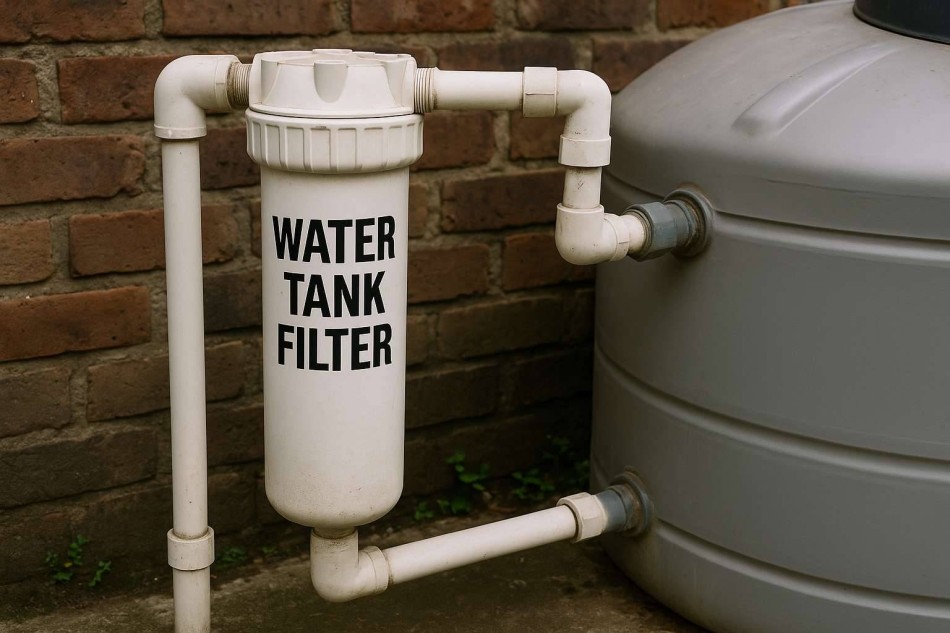
– The filter is usually placed on the outlet line of the water tank or ahead of irrigation systems. Ensure it is installed where water flows into the pressure pump.
– Position the filter with its inlet side connected to the water source and the outlet leading to the system.
- Prepare the Plumbing Line
– Measure and cut the pipe where the filter will be installed.
– Add any necessary fittings such as elbows or couplings to match the filter connections.
- Install the Filter
– Wrap Teflon tape around male pipe threads to prevent leaks during connection.
– Align the filter’s inlet and outlet ports with the respective pipes, securing them tightly using a wrench—but avoid over-tightening to protect threads.
- Orient Correctly
– Check that water flow aligns with directional arrows marked on the filter’s body.
– Ensure the pointed end of the filter faces downward to keep debris out of the plumbing during cleaning.
- Check for Leaks
– Turn on the water supply and inspect all connections for leaks. Tighten fittings if necessary.
- Insert the Filter Cartridge
– If using a removable disc cartridge, ensure discs are placed securely inside the housing. Position seals and O-rings correctly to prevent leakage.
- Test Your System
– Verify proper flow direction (from left input source to right outlet). Confirm that everything is functioning smoothly.